Natural Causes
An Inlet resident’s fund gets to the root of a problem
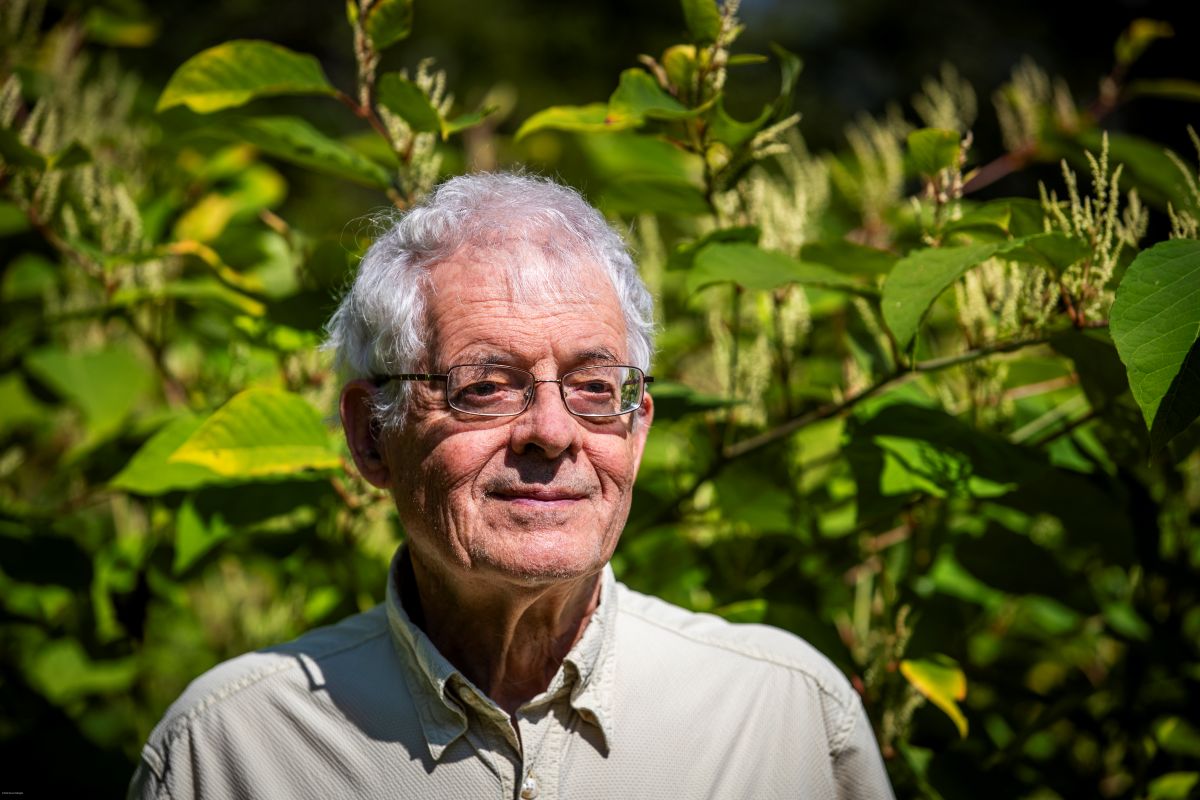
Dr. Doug Johnson has come to his family’s property on Seventh Lake every summer since he was three months old. His fondness for Inlet and the rest of the Adirondacks has inspired him to staunchly defend the natural resources of this amazing place. In the 1970s he saw an invasive species called Japanese Knotweed run rampant in Vermont, where he also spends time. Knotweed, with its bamboo-like stems, is an ornamental plant that can aggressively crowd out native plants. It clusters in dense stands, with stalks as tall as 10 feet high.
When Johnson recognized a stand of knotweed growing alongside Route 28 in his beloved Inlet, and then Old Forge and Blue Mountain Lake, he tackled the problem with a physician’s zeal for eradicating a contagion. He marshalled a team of staff from the Nature Conservancy, local volunteers, and local town supervisors and clerks, as well as county soil and water conservation departments, to surgically attack the problem.
Their determined efforts have helped to combat the growth of knotweed, wild parsnip, and other plants – treating as many as 75,000 canes a summer at more than 200 sites, primarily in Hamilton, Franklin, Essex, and Warren Counties. Doug even became a certified pesticide applicator along the way.
He contributed more than passion and sweat equity to the cause. He personally funded pesticide treatment efforts and has assisted towns as they apply for state grants. He enlisted the help of Ezra Schwartzberg’s Adirondack Research, which innovated a gadget to more efficiently inject pesticides into plant stalks. He also opened a Field of Interest Fund at ACF that he called the Adirondack Terrestrial Invasive Species Management Fund. By opening the fund using a Qualified Charitable Distribution (QCD) from his IRA, he mitigated tax implications of income drawn from his IRA account.
The Foundation manages grant applications to the fund from towns and groups seeking support for invasive plant eradication efforts. In its initial summer, the fund is supporting three projects. Johnson was joined recently by Tupper Lake Town Clerk Mary Kay Strack and Ezra Schwartzberg to examine a stand of knotweed. On top of the multiyear grant from Doug’s fund, Doug also helped Strack secure DEC funding to cover free eradication on private properties throughout the town. Strack noted that property owners were lining up to identify the plants and have them treated. A smile spread on Johnson’s face: a grand scheme, bolstered by years of elbow grease and devoted outreach to towns and volunteers, powered by a new fund at Adirondack Community Foundation, was working exactly as he planned.
To learn more about starting a fund to support a cause you’re passionate about, contact CJ Dates at cj@adkcommunityfoundation.org.
To support the Terrestrial Invasives Species Fund please visit adkcommunityfoundation.org.